
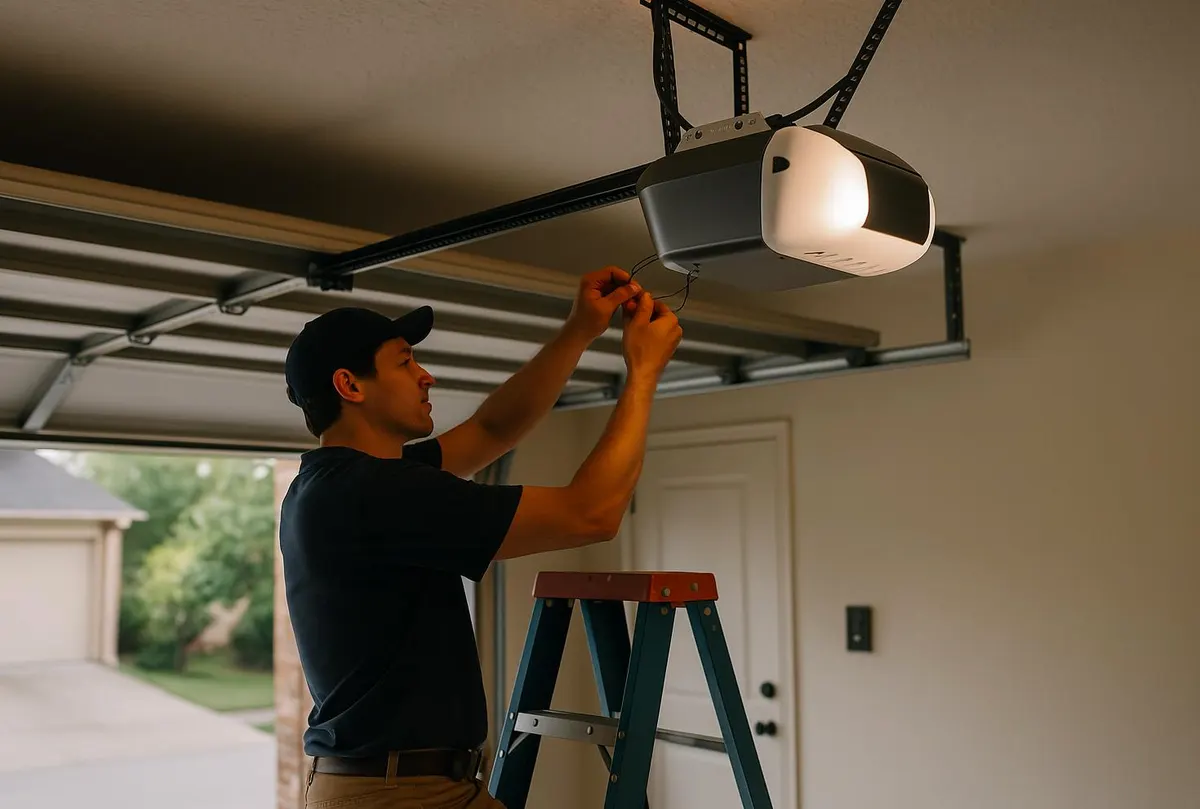
A garage door that's starting to bind, scrape, or sit crooked in its track rarely fixes itself. Left alone through a Downriver Michigan winter, a minor misalignment tends to turn into a derailed door, a cracked panel, or an opener motor that's been straining against metal for weeks. Once the ground freezes and the slab around your garage stiffens up, a track that's already off-plumb gets worse fast, and the repair that would have taken an hour in October can turn into a full track replacement, a damaged door section, or a service call that has to happen during a snowstorm because the door won't close. Catching this now, while the weather still cooperates, is the cheap version of this problem.
Symptoms That Point to Track Trouble
Track issues usually show up gradually, and most homeowners notice the sound before they notice the door itself isn't moving right. Here's what to watch and listen for:
- Scraping or grinding noise as the door travels up or down, especially near the same spot each time
- Visible gap between the rollers and the track on one side, or a track that's pulled away from the wall
- The door looks crooked when it's halfway open, lower on one side than the other
- Jerky or uneven movement, where the door hesitates or jumps instead of gliding smoothly
- Door reverses or stops partway through its cycle without an obvious obstruction
- Dents or stress marks on the bottom panel where it meets the track
- Rollers that look chipped, flat-sided, or worn down on close inspection
Any one of these on its own might be minor. Two or three together usually mean the track has shifted enough to need attention.
What's Actually Causing It — In the Order a Technician Checks
1. A bent or bowed section of track
This is the first thing to rule out, and it's usually visual. A car bumper, a stored ladder, a snow blower backing out too fast, or even a kid's bike can nick the track hard enough to put a kink in it. Sometimes it's subtle enough that you only notice the roller catching at that one spot. Minor bends can be hammered back into shape with the door removed from the track; a track that's bowed or crimped more than a quarter inch out of true usually gets replaced in that section rather than forced back into shape, since metal that's been bent once is weaker everywhere along that curve.
2. Loose or shifted mounting brackets
Tracks are bolted to the door frame and the ceiling structure, and those fasteners work loose over years of vibration, especially on doors that get opened and closed multiple times a day. In older garages, framing can also settle slightly, pulling the bracket out of its original position by a fraction of an inch — enough to throw the track out of alignment. The fix here is straightforward: re-tighten the hardware, and if the framing itself has moved, add shims to bring the bracket back to where the track needs to sit.
3. Worn or damaged rollers
Rollers take the brunt of daily wear, and in this climate they also take a beating from road salt tracked in on tires and from ice that forms in the track during a freeze-thaw cycle. A roller that's cracked, flat on one side, or missing its bearing won't ride the track smoothly, and it will gradually wear a groove or push the track outward as it travels. Technicians check rollers by hand, spinning each one to feel for roughness or play. Worn rollers get swapped for new nylon or steel ones, matched to the stem length the door already uses.
4. Track plumb and level
Even with straight track and good rollers, the whole assembly has to be plumb against the frame and level with its opposite side. This is where ground movement comes into play — the spring thaw and mud season common here can shift soil under a slab just enough to tilt a garage frame slightly, and that tilt carries through to the track mounting. A level and a plumb line tell the story quickly. The fix is repositioning the track and re-shimming the brackets until both sides match.
5. Uneven spring tension
If the track and rollers check out fine but the door still travels crooked, the springs are usually next. A torsion spring that's lost tension on one side, or a pair of extension springs with mismatched pull, will yank the door unevenly as it opens, putting lateral stress on the track that no amount of straightening will fully solve. This gets corrected by adjusting or replacing the spring, which is also one of the more dangerous DIY jobs in the house — these are wound under heavy tension and not something to tackle with a Saturday afternoon and a socket wrench.
6. Cables off the drum or frayed
Last on the list because it's less common, but a cable that's slipped off its drum or started fraying will let one side of the door drop slightly, tilting it against the track and causing the same binding and scraping symptoms. This gets re-seated or replaced along with an inspection of the drum itself for wear.
When to Call Riverview Garage Door Pro
If your door is scraping, hanging crooked, or jumping in the track, that's a call-now situation rather than a wait-and-see one — a door that fails mid-cycle in freezing weather is a much bigger inconvenience than one caught in October. Our Garage Door Repair technicians check track alignment, rollers, and spring tension in that order and fix whatever's actually causing the problem rather than just patching the symptom. If your door hasn't had a look in a year or two, our Garage Door Maintenance service catches loose brackets, worn rollers, and early misalignment before they turn into a 6 a.m. emergency call in January.
If your garage door is rubbing, crooked, or louder than it used to be, call Riverview Garage Door Pro today — we serve Riverview, MI and the surrounding Downriver communities, and we show up when we say we will.